How to Mix Kitchen Metals (For a Cozy, Collected Look)
This post may contain affiliate links, please review my disclosure policy.

Hi friends!
Today we’re talking all about how to mix kitchen metals for a cozy, collected kitchen. And before we get into it, technically there is an endless combination of metals you can combine, but not all are created equal! In the year 2026, designers are creating all the warm, lived-in, full of charm kitchens by sticking to the formulas we will be discussing.

For years, I thought mixing kitchen metals was basically against the law *gasp!* If I picked brass cabinet hardware, then obviously the faucet HAD to match. The light fixtures had to match! The cabinet pulls? Had to match! Somewhere along the Farmhouse kitchen way, we were convinced that every single piece of metal in the kitchen needed to be identical.
Looking back, I fully understand how this happened. We spent YEARS seeing all-white kitchens where every finish matched perfectly. HOWEVER! In the past couple of years, we have started seeing something completely different.
The kitchens having a moment right now are anything but perfectly matched. They feel layered and created over time. They look like they’ve been carefully updated over the years rather than installed in a single weekend. Think Nancy Meyers, English cottage inspired kitchens. What you might not realize is that these kitchens almost always use mixed metals.
So if you’ve been staring at cabinet hardware samples wondering if you can mix brass with polished nickel or what in the world is BEST, pull up a chair! Let’s talk about the “rules” of mixing metals in the kitchen and what we are seeing in the year 2026.

Why Mixed Metals Are Trending in 2026
If you look back at kitchens from ten or fifteen years ago, matching was EVERYTHING. If your faucet was brushed nickel, you bet your bottom dollar your cabinet hardware was too!
Today’s kitchens tell a different story. Instead of matching every finish, designers are layering materials and finishes to make a home feel more personal. We’re seeing it with furniture, where different wood tones are mixed together instead of perfectly matching. We’re seeing it in textiles, where linen, velvet, leather, and woven textures all live happily in the same room.
The same idea applies to your kitchen! A well-designed mixed-metal kitchen doesn’t feel busy, but rather, it feels collected. It feels like the home has grown naturally over time, and that’s exactly what so many of us are trying to create.
The goal is to choose a couple of complementary metals and use them intentionally. That’s what gives a kitchen depth, personality, and a cohesive look without feeling overly designed.

The Three Rules Designers Follow When Mixing Kitchen Metals
If you remember nothing else from this post, remember these three rules! They’ll make every decision so much easier.
Rule #1: Choose One Dominant Metal
Every beautiful kitchen starts with one dominant finish. Think of this as your primary metal or your base metal. It’s the finish you’ll repeat throughout the kitchen, and it becomes the foundation for every other decision you make. Let this be the one you absolutely LOVE.
Most often, your dominant metal will show up on your cabinet hardware and drawer pulls.
Some of today’s most popular FINISH CHOICES:
- Unlacquered brass
- Aged brass
- Antique brass
- Polished nickel
- Champagne bronze
- Matte black
If you’ve been around here for a while, you probably won’t be surprised to hear that I’m partial to aged and unlacquered brass. We actually chose aged brass hardware in our own kitchen because it gives the look of unlacquered brass (over time) without quite the hefty price tag. It has those gorgeous warm tones that instantly make a kitchen feel inviting.
If you’re hoping for a kitchen that feels timeless rather than trendy, I think aged or unlacquered brass is a beautiful place to start!
Rule #2: Add One (or Two Max) Accent Metal
Once you’ve chosen your dominant finish, it’s time to choose your accent metal.
As we discussed, your dominant finish usually belongs on elements like cabinet hardware and drawer pulls. Your accent metal is often used for faucets, pot fillers, soap dispensers, light fixtures, etc.
This is where polished nickel has really made a comeback! One of the reasons it works so well is that it blends beautifully with warm metals like brass, antique brass, and champagne bronze. Brass brings warmth and softness, while polished nickel reflects light and keeps everything from feeling too golden or heavy. The two finishes balance each other beautifully.
Think of your accent metal as playing a supporting role. It shouldn’t compete with your dominant finish. Instead, it should help highlight it.
Rule #3: Let Stainless Steel Appliances Be Neutral
This might be the tip that saves you the most stress. Don’t overthink your appliances! Your stainless steel range, refrigerator, dishwasher, microwave, and stainless steel sinks don’t need to match your decorative metals. Think of it as simply part of the background!
The Four Kitchen Metal Combinations Designers Love Right Now:
1. Unlacquered Brass + Polished Nickel (Nancy Meyers/Quiet Luxury Look)

If I had to choose one combination for my own kitchen today, this would be it! It’s warm without feeling trendy, and elegant without feeling formal.
The unlacquered brass brings warmth, character, and that beautiful lived-in feeling that so many of us are after right now. Over time, it develops a natural patina that only adds more charm.
The polished nickel, on the other hand, reflects light beautifully. It keeps the kitchen from feeling overly golden and adds just enough brightness to balance all those warm tones.
You’ll most often see this combination used like this:
Unlacquered Brass
- Cabinet hardware
- Cabinet pulls
- Brass drawer pulls
- Pendant lights
- Brass pendants
Polished Nickel
- Faucet
- Pot filler
- Bar sink faucet
- Other plumbing fixtures
This combination works especially well with classic white kitchens, white oak kitchens, marble countertops, warm white paint colors, creamy backsplashes, homes inspired by Nancy Meyers or Studio McGee.
2. Antique/Aged Brass + Polished Nickel (Collected Traditional Look)
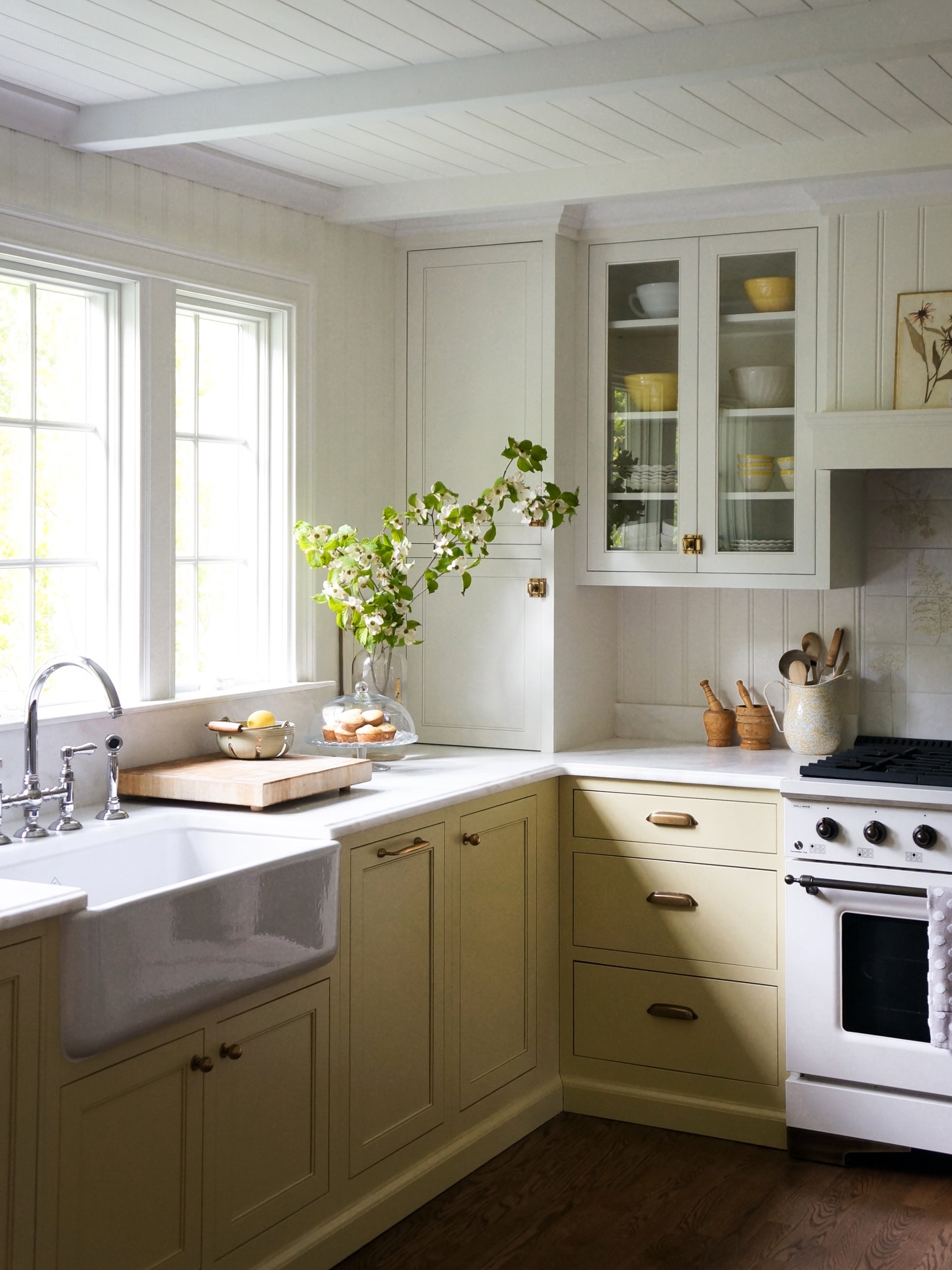

This pairing feels a little more refined than the first two. Think timeless architecture, inset cabinetry, marble countertops, millwork. This is one of my favorite combinations for older homes because it feels like it could have been beautiful twenty years ago, and it will still be beautiful twenty years from now.
The polished nickel brings a crisp, tailored feel, while the antique brass softens everything just enough. I love this combination because it doesn’t follow trends. It simply feels classic.
You’ll often see polished nickel on faucets and plumbing fixtures, while antique brass serves as the jewelry of the kitchen through cabinet hardware and lighting.
3. Aged Brass + Black Iron (Modern English Cottage Feel)
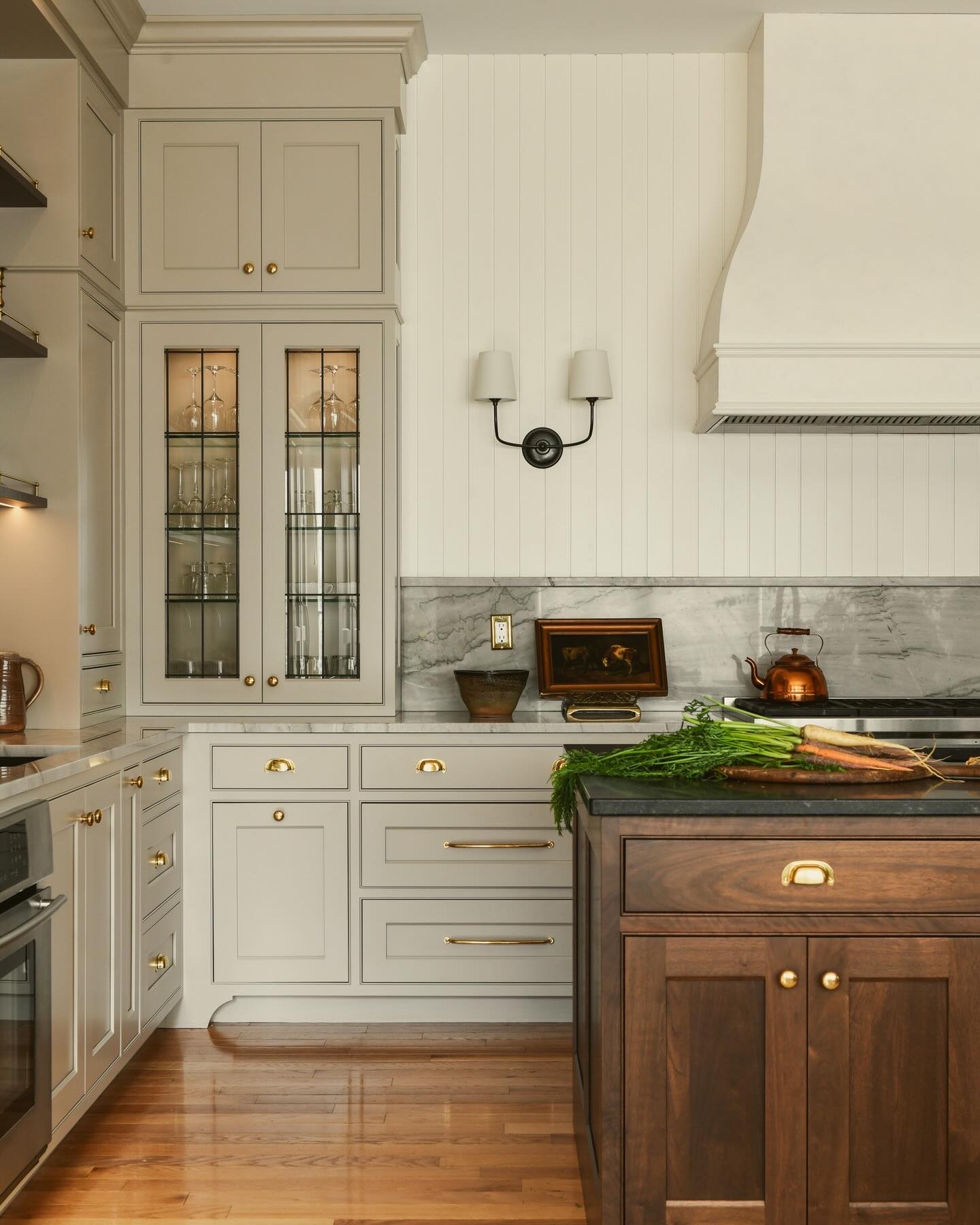
If your dream kitchen feels warm, collected, and full of character, this combination is hard to beat. It’s one of the defining looks in today’s modern English cottage kitchens, blending old-world charm with clean, updated lines. Think painted cabinetry, natural wood beams, marble countertops, and a plaster range hood that looks like it’s has always been there.
The unlacquered brass brings warmth and a beautiful lived-in patina over time, while black iron adds contrast and gives the room architectural structure. Together, they create a kitchen that feels cozy and timeless without feeling overly rustic or overly formal.
You’ll often see unlacquered brass used on cabinet hardware, range details, and decorative accents, while black iron appears on pendant lights, sconces, window frames, and even the faucet. It’s a pairing that feels effortlessly layered and is especially beautiful in homes inspired by English cottages, European farmhouses, and collected traditional design.
Don’t Forget About Sheen
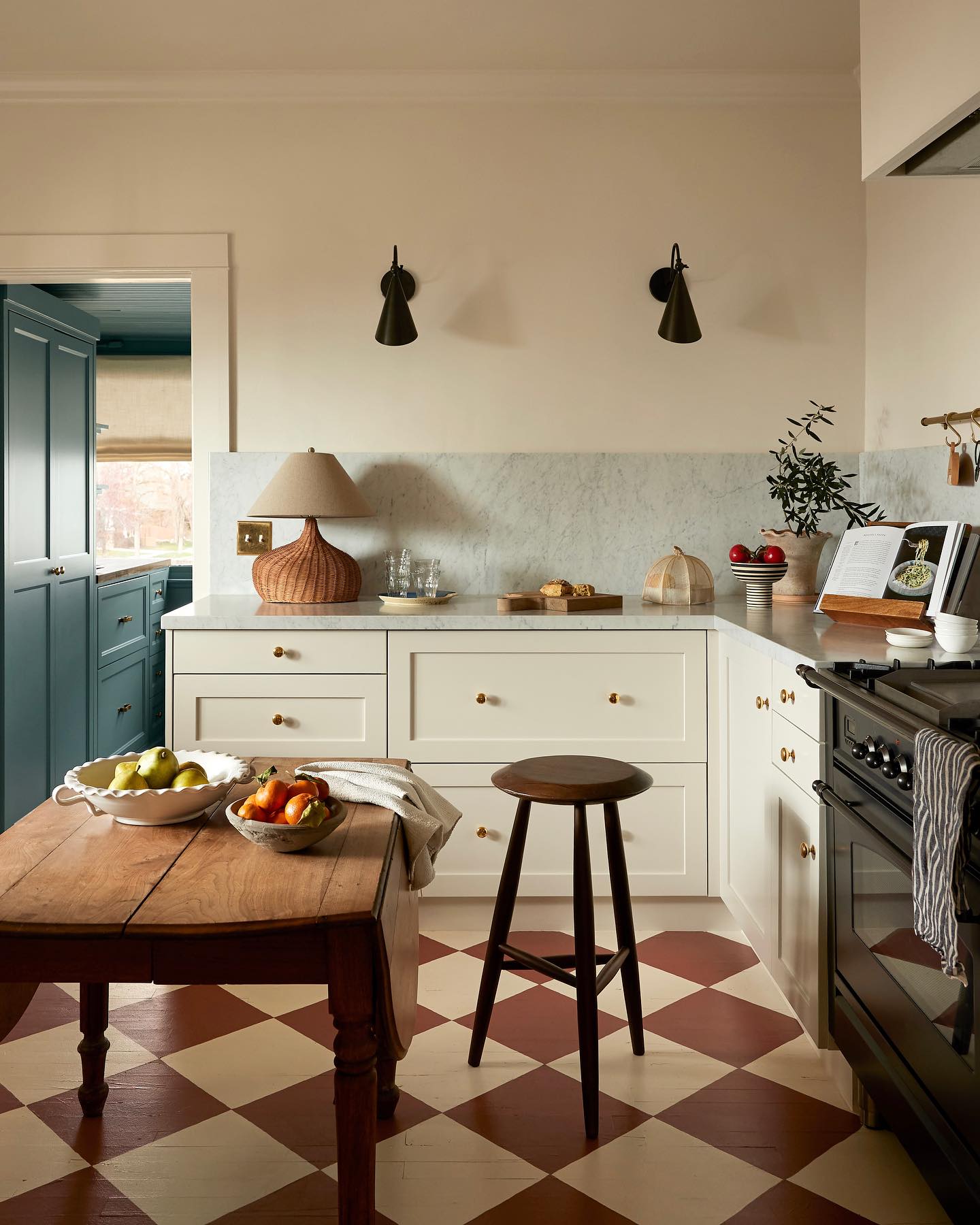
One trend that’s becoming more noticeable in kitchen design has nothing to do with the metal’s color. It’s the sheen! Designers aren’t just mixing brass with polished nickel. They’re mixing soft finishes with shiny finishes.
For example, your aged brass cabinet hardware may have a soft, lived-in appearance, while your polished nickel faucet catches the light and becomes a subtle focal point. That little bit of contrast creates visual interest without making the kitchen feel busy.
It’s one of those details that people don’t always notice consciously, but they definitely feel it.
Mistakes to Avoid When Learning How to Mix Kitchen Metals
There are a few common mistakes that can make a kitchen feel more chaotic than collected.
1. Using too many metals.
Two finishes are almost always enough.
If you’d like to introduce a third finish, keep it in smaller decorative pieces like a vintage picture frame, pots, a mirror frame, or candle holders.
2. Matching every single thing.
Ironically, this often makes a kitchen feel flatter instead of more polished. A little contrast gives your eye somewhere to land.
3. Forgetting the rest of your home.
Your kitchen shouldn’t feel completely disconnected from your living room or dining room.
Repeating similar finishes throughout your home helps the entire space feel cohesive, even if every room isn’t identical.
4. Ignoring undertones.
Warm metals like brass, antique brass, and champagne bronze naturally work well together. Cool finishes similar to polished nickel, chrome, and stainless steel complement one another.
Mixing warm and cool finishes is beautiful, but you still want them to feel intentional.
One Last Encouragement for Mixing Kitchen Metals!
If you’ve made it this far, allow me to leave you with one thought!
This doesn’t have to be perfect! Some of my favorite kitchens don’t follow every design “rule.” They simply feel like someone thoughtfully chose pieces they loved over time. That’s the feeling we’re after!
So if you’re standing in the hardware aisle holding six different finishes, take a deep breath and start with the finish that makes you absolutely LOVE. The goal isn’t a perfectly matched kitchen. The goal is to create a kitchen that feels warm, welcoming, and like it has a story to tell. I truly think those are the kitchens we’ll still be loving ten years from now.
I hope this post on how to mix kitchen metals helps you find the perfect combination for your home!
Until next time,
Courtney
PIN THIS THIS FOR LATER: